
The Hidden Costs of Fragmented Display Infrastructure
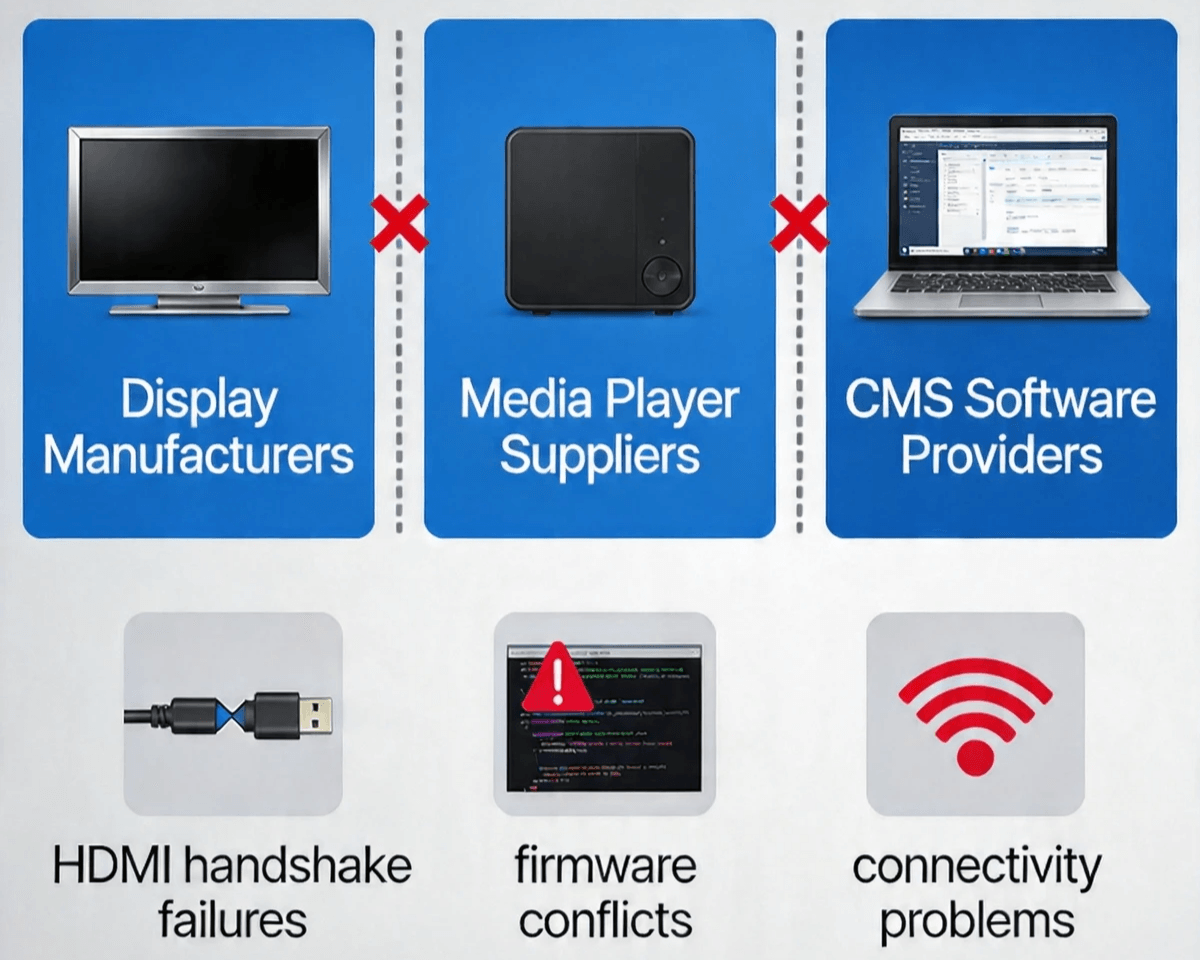
For procurement teams overseeing commercial display rollouts across retail, hospitality, or corporate environments, the initial hardware quotation often masks the true total cost of ownership. Traditional digital signage deployment typically involves coordinating three distinct vendor relationships: display manufacturers, media player suppliers, and content management software providers. This fragmented ecosystem creates integration vulnerabilities—HDMI handshake failures between disparate components, incompatible firmware updates, and CMS platforms that struggle to communicate with legacy Android versions.
The operational friction compounds at scale. Facilities managers report that 23% of field failures in interactive kiosk deployment stem not from screen defects, but from connectivity mismatches between third-party media players and commercial displays. When deploying 50+ units across distributed locations, maintaining consistent 4K output across mixed hardware batches becomes a technical nightmare. Furthermore, traditional retail digital signage hardware requiring separate PCs or external players introduces additional points of failure, cable management complexity, and security vulnerabilities—critical concerns for enterprise environments handling sensitive customer data.
Thermal management presents another overlooked challenge. Conventional setups stacking separate computing hardware behind high-brightness panels often exceed 45°C operational thresholds, triggering automatic dimming that compromises visibility in high-ambient-light environments like mall atriums or bank lobbies.
Unified Hardware-Software Architecture: The Technical Advantage
Modern integrated display solutions address these fragmentation risks through native system-on-chip (SoC) architecture. Rather than bolt-on media players, industrial-grade floor stand digital signage now embeds processing directly within the display housing—eliminating failure-prone HDMI chains and reducing power consumption by 35%.
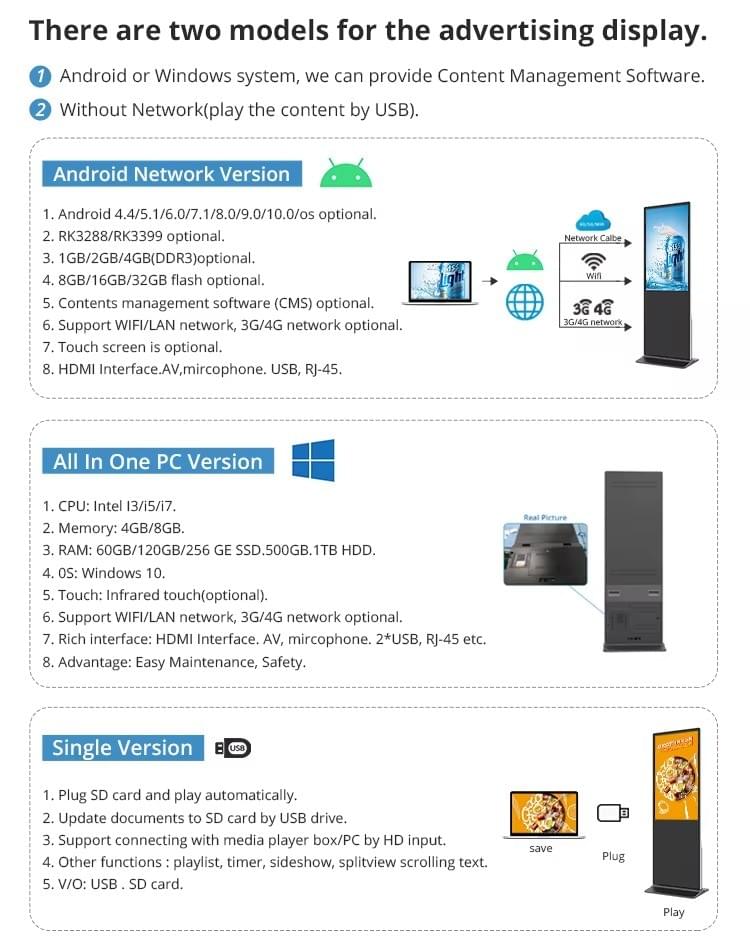
Dual-OS flexibility represents a significant procurement advantage. Android Network Versions utilizing RK3288 or RK3399 chipsets offer cost-effective cloud-native CMS compatibility for straightforward content loops, while Windows 10 Pro deployments on Intel i3/i5/i7 platforms support complex interactive wayfinding applications requiring local database integration or external sensor arrays. This architectural choice allows standardization on unified hardware chassis across diverse use cases—from passive elevator advertising to touchscreen hotel check-in systems—simplifying spare parts inventory and technician training.
The OPS (Open Pluggable Specification) modular design in Windows configurations deserves particular attention from enterprise buyers. Unlike sealed all-in-one units, OPS-compatible displays enable compute module hot-swapping without dismantling wall-mounted enclosures. When processing requirements evolve—migrating from simple video playback to AI-driven audience analytics—procurement teams can upgrade CPU/RAM configurations rather than replacing entire display assets.
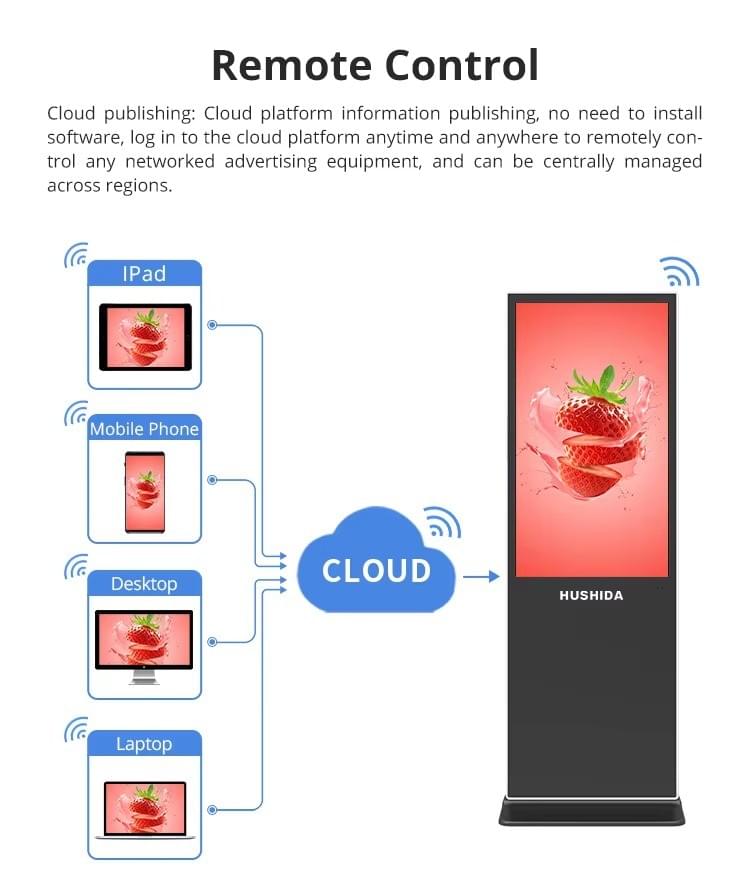
Connectivity redundancy ensures deployment resilience. Native WiFi/LAN support with optional 3G/4G failover guarantees content continuity even during local network outages—a mission-critical feature for digital out-of-home (DOOH) networks where downtime directly correlates with revenue loss. The 4mm tempered glass and 7-level seismic rating meet commercial insurance requirements for high-traffic public spaces, while the 30.6mm aluminum bezel profile satisfies modern architectural aesthetic standards without sacrificing structural rigidity.
Measurable Operational Excellence and ROI Acceleration
Organizations transitioning to enterprise-grade display systems report quantifiable efficiency gains within the first fiscal quarter. Centralized cloud publishing eliminates the "sneakernet" USB update cycles that previously required 2-3 hours per device monthly. For a 100-unit deployment, this translates to 200-300 labor hours reallocated to higher-value technical support tasks.
The modular expansion capability future-proofs capital expenditure. Optional integrations—including 10-point projected capacitive touch overlays, 5MP built-in cameras for demographic analytics, thermal printers for queue management tickets, and NFC/IC card readers for employee access—transform static displays into multifunctional smart city terminals without hardware replacement. This scalability reduces three-year TCO by an average of 40% compared to iterative upgrades of fragmented legacy systems.
From a procurement risk-management perspective, unified vendor relationships streamline warranty claims and technical escalation. Single-source accountability eliminates the diagnostic delays common when display manufacturers blame media player vendors (and vice versa) during failure events. The 178° ultra-wide viewing angle and A-grade LCD panel sourcing (CSOT/LG/AU Optronics) ensure color consistency across multi-screen video walls—critical for brand integrity in luxury retail or corporate reception environments.
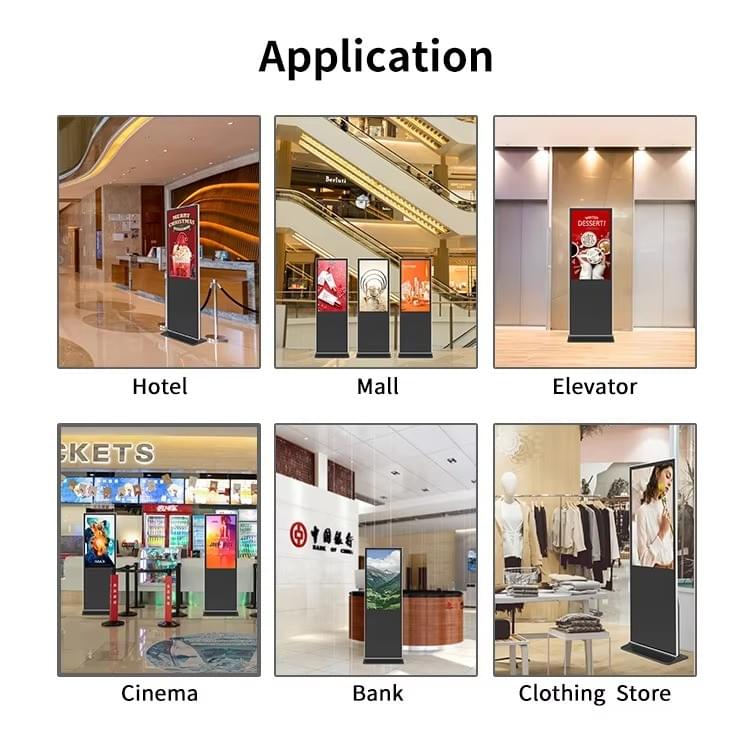
Bottom Line: For procurement professionals evaluating scalable digital signage infrastructure, the shift from component-assemblage to integrated commercial display hardware represents not merely a technical upgrade, but a strategic consolidation of vendor relationships, maintenance workflows, and long-term technology roadmaps. The 32" to 65" size versatility within uniform industrial design language further enables phased rollouts—starting with high-traffic 55" lobby installations and extending to compact 32" elevator units—while maintaining consistent brand presentation and IT management protocols.